
Many mutual fund investors may have learned about a new term IDCW over the past couple of months and have received emails from Asset Management Companies notifying them about the change in terminology. Some investors could also be conscious of what IDCW is, but there could also be many investors who don't know what this suggests. In this blog post, we will discuss IDCW, and why this alteration was made by SEBI, and what should investors be aware of.
What is IDCW?
IDCW’ is a short form of ‘Income Distribution cum Capital Withdrawal’. In April 2021, SEBI replaced the term “Dividend Option” with “IDCW”. If you had invested in mutual fund Dividend Options previously, which is now changed to IDCW next to the mutual fund scheme name in your account statements. This is only a change in terminology; there's no impact on investors. However, for the point of investor awareness, one should know why SEBI made this change. But first, let us understand what are mutual fund dividends to clear out any misconceptions.

Myths about the Mutual Fund Dividends
1) Dividends paid by the mutual funds are the dividends given by their underlying stocks of the schemes.
Truth – Mutual fund dividends do consist of dividends received by the underlying stocks, but it also includes the profits that are made by selling the stocks of the portfolio of the respective scheme.
2) Mutual fund dividends are the returns given in addition to the capital appreciation made in the portfolio of the scheme.
Truth – Mutual fund dividends are not the returns paid in addition to capital appreciation, but they pay dividends in place of capital appreciation.
3) Dividend options of mutual fund schemes book profits to pay regular dividends to the investor.
Truth – The underlying stocks portfolio of growth and dividend options of the mutual fund scheme is the same. Profit booking is done at a scheme level that is applicable for both growth and dividend options. The difference is, in which way the profits are distributed. In the growth option, the profits are reinvested in the scheme; whereas in the dividend option, the decision to distribute the profit made by the scheme to investors is at the discretion of the Asset Management Company
3) Dividend options of mutual fund schemes book profits to pay regular dividends to the investor.
Truth – The underlying stocks portfolio of growth and dividend options of the mutual fund scheme is the same. Profit booking is done at a scheme level that is applicable for both growth and dividend options. The difference is, in which way the profits are distributed. In the growth option, the profits are reinvested in the scheme; whereas in the dividend option, the decision to distribute the profit made by the scheme to investors is at the discretion of the Asset Management Company


Difference between company(Stocks) dividends and mutual fund dividends
We may observe, mutual fund dividends are similar to dividends paid by companies, however, there are vast differences between the two:-
Companies pay dividends from the Profit After Tax (PAT) after keeping aside a part of the profit as Reserves and Surplus for the future expansion of the company. Later the management takes the decision of the portion of the profits that should be paid as dividends to their shareholders.
In the case of Mutual funds, the dividends are paid from the accumulated surplus profits made by the scheme. The management decides about the dividend payout rate per unit. But whether they pay out the dividend or not, profits made by the scheme always belong to the investors and are reflected in the Net Asset Value (NAV) of the scheme.
The share price of a stock may go up or down by the market sentiments after dividends are declared.
The Net Asset Value(NAV) of a scheme will always decrease after the dividend payout by the mutual fund
Let us understand the above-mentioned point with the help of an example below. Let's say you have 1,000 units of a mutual fund scheme. The current NAV which we say as cum dividend of the scheme is Rs 100. The scheme declares a dividend of Rs 10 per unit. Let us see how your investment is impacted after the dividend payout.
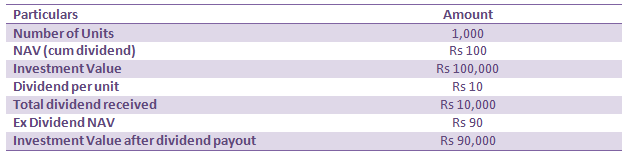
Disclaimer: Figures in the above example are purely illustrative and for understanding purposes only. Always consult your financial advisor to know the impact of dividends on your mutual fund portfolio value of the different schemes.
From the above, we see that in dividend payout we do not receive any extra income. It is paid out of your mutual fund value. But when you invest in the growth option of the scheme, the value of your investment would have been Rs 100,000 instead of Rs 90,000. And when you invest in shares of a company, you are entitled to get both, dividends as well as share price appreciation. However, in the case of mutual funds, the dividends come out of capital appreciation.
Why SEBI changed the term Dividend to IDCW?
Income Distribution cum Capital Withdrawal refers to the distribution of the income of a mutual fund scheme, which may include both dividends paid by stocks and capital gains made by selling underlying stocks of the scheme. However, SEBI has also emphasized that the income is paid out of your investment value (refer to the example above), alternately, it is a capital withdrawal. The term IDCW is a more exact description of mutual fund dividends which provides clarity to investors so as to make more proper investment decisions and clear their misconceptions
Whether to invest in Growth or IDCW?
An Investor can decide based on the following considerations:-In the Growth Option, the profits made by the scheme remain invested in the scheme. Over sufficiently long investment tenures, you can earn a profit on profits. by the process of the power of compounding. We have studied in our previous post about the power of compounding as a significant factor in wealth creation.
In IDCW, the profits made by the scheme could also be distributed to the Investors partially or fully at the discretion of the AMC. In which case lose the advantage of compounding. If the investment objective of the investor is purely capital appreciation or wealth creation, you should go with a growth option.
In the case where the investor likes regular cash-flows income from his investments, then he has to choose the IDCW option. However, you ought to remember that income distribution is at the discretion of the AMC. Therefore there is no guaranteed income in mutual funds.

Taxation: Capital gains upon redemptions in growth options are subject to capital gains tax. Short-term capital gains in equity funds (investment holding period of fewer than 12 months) are taxed at 15% (plus applicable surcharge and cess). Long-term capital gains in equity funds (investment holding period of quite 12 months) are tax-exempt up to Rs 100,000 and taxed at 10% (plus applicable surcharge and cess) thereafter.
Dividends received in IDCW are added to your gross taxable income and taxed as per your tax slab rate. From a taxation point of view, IDCW is having a significant disadvantage over the growth option, for investors who are in the higher tax brackets.
कई म्यूचुअल फंड निवेशकों ने पिछले कुछ महीनों में आईडीसीडब्ल्यू (IDCW) के एक नए शब्द के बारे में सीखा होगा और उन्हें एसेट मैनेजमेंट कंपनियों से ईमेल प्राप्त हुए हैं जो उन्हें शब्दावली में बदलाव के बारे में सूचित करते हैं। कुछ निवेशक इस बात से भी अवगत हो सकते हैं कि IDCW क्या है, लेकिन कई निवेशक ऐसे भी हो सकते हैं जो यह नहीं जानते कि इससे क्या पता चलता है। इस ब्लॉग पोस्ट में, हम IDCW पर चर्चा करेंगे, और SEBI द्वारा यह परिवर्तन क्यों किया गया, और निवेशकों को क्या पता होना चाहिए।
आईडीसीडब्ल्यू क्या है?
आईडीसीडब्ल्यू 'आय वितरण सह पूंजी निकासी' का संक्षिप्त रूप है। अप्रैल 2021 में, सेबी ने "डिविडेंड ऑप्शन" शब्द को "IDCW" से बदल दिया। यदि आपने पहले म्यूचुअल फंड डिविडेंड ऑप्शन में निवेश किया था, जिसे अब आपके अकाउंट स्टेटमेंट में म्यूचुअल फंड स्कीम के नाम के आगे IDCW में बदल दिया गया है। यह केवल शब्दावली में परिवर्तन है; निवेशकों पर कोई असर नहीं हालांकि, निवेशकों को जागरूक करने के लिए यह जानना जरूरी है कि सेबी ने यह बदलाव क्यों किया। लेकिन पहले, आइए समझते हैं कि किसी भी गलतफहमी को दूर करने के लिए म्यूचुअल फंड लाभांश क्या हैं।
म्युचुअल फंड लाभांश के बारे में गलतफैमी
1) म्युचुअल फंड द्वारा भुगतान किए गए लाभांश योजनाओं के उनके अंतर्निहित शेयरों द्वारा दिए गए लाभांश हैं।
सच्चाई - म्युचुअल फंड लाभांश में अंतर्निहित शेयरों द्वारा प्राप्त लाभांश शामिल होते हैं, लेकिन इसमें वह लाभ भी शामिल होता है जो संबंधित योजना के पोर्टफोलियो के शेयरों को बेचकर प्राप्त होता है।
2) म्यूचुअल फंड लाभांश योजना के पोर्टफोलियो में किए गए पूंजी प्रशंसा के अलावा दिया गया रिटर्न है।
सच्चाई - म्युचुअल फंड लाभांश पूंजीगत प्रशंसा के अतिरिक्त भुगतान किए गए रिटर्न नहीं हैं, लेकिन वे पूंजी प्रशंसा के स्थान पर लाभांश का भुगतान करते हैं।
3) म्यूचुअल फंड योजनाओं के लाभांश विकल्प निवेशक को नियमित लाभांश का भुगतान करने के लिए मुनाफा बुक करते हैं।
सच्चाई - म्यूचुअल फंड योजना के विकास और लाभांश विकल्पों का अंतर्निहित स्टॉक पोर्टफोलियो समान है। प्रॉफिट बुकिंग स्कीम के स्तर पर की जाती है जो ग्रोथ और डिविडेंड दोनों विकल्पों पर लागू होती है। अंतर यह है कि लाभ किस प्रकार वितरित किया जाता है। विकास विकल्प में, लाभ को योजना में पुनर्निवेशित किया जाता है; जबकि लाभांश विकल्प में, योजना द्वारा किए गए लाभ को निवेशकों को वितरित करने का निर्णय एसेट मैनेजमेंट कंपनी के विवेक पर होता है।
कंपनी (स्टॉक) लाभांश और म्यूचुअल फंड लाभांश के बीच अंतर
हम देख सकते हैं, म्यूचुअल फंड लाभांश कंपनियों द्वारा भुगतान किए गए लाभांश के समान हैं, हालांकि, दोनों के बीच बहुत बड़ा अंतर है: -
कंपनियां लाभ के एक हिस्से को रिजर्व और अधिशेष के रूप में अलग रखने के बाद कर के बाद लाभ (पीएटी) से लाभांश का भुगतान करती हैं। कंपनी का भविष्य विस्तार। बाद में प्रबंधन लाभ के उस हिस्से का निर्णय लेता है जिसे उनके शेयरधारकों को लाभांश के रूप में भुगतान किया जाना चाहिए।
म्यूचुअल फंड के मामले में, लाभांश का भुगतान योजना द्वारा किए गए संचित अधिशेष लाभ से किया जाता है। प्रबंधन प्रति यूनिट लाभांश भुगतान दर के बारे में निर्णय लेता है। लेकिन वे लाभांश का भुगतान करते हैं या नहीं, योजना द्वारा अर्जित लाभ हमेशा निवेशकों का होता है और योजना के शुद्ध संपत्ति मूल्य (एनएवी) में परिलक्षित होता है।
लाभांश घोषित होने के बाद शेयर की कीमत बाजार की भावनाओं से ऊपर या नीचे जा सकती है। म्यूचुअल फंड द्वारा लाभांश भुगतान के बाद किसी योजना का शुद्ध संपत्ति मूल्य (एनएवी) हमेशा कम हो जाएगा आइए हम नीचे दिए गए उदाहरण की सहायता से उपर्युक्त बिंदु को समझते हैं।
मान लीजिए कि आपके पास म्यूचुअल फंड योजना की 1,000 इकाइयां हैं। वर्तमान एनएवी जिसे हम योजना के सह लाभांश के रूप में कहते हैं, 100 रुपये है। यह योजना 10 रुपये प्रति यूनिट के लाभांश की घोषणा करती है। आइए देखें ऊपर दिए गये चार्ट से पता करते है ,कि लाभांश भुगतान के बाद आपका निवेश कैसे प्रभावित होता है।
अस्वीकरण: उपरोक्त उदाहरण में आंकड़े पूरी तरह से उदाहरण हैं और केवल समझने के उद्देश्य से हैं। विभिन्न योजनाओं के आपके म्यूचुअल फंड पोर्टफोलियो मूल्य पर लाभांश के प्रभाव को जानने के लिए हमेशा अपने वित्तीय सलाहकार से परामर्श लें।
उपरोक्त से, हम देखते हैं कि लाभांश भुगतान में हमें कोई अतिरिक्त आय प्राप्त नहीं होती है। यह आपके म्यूचुअल फंड मूल्य से भुगतान किया जाता है। लेकिन जब आप स्कीम के ग्रोथ ऑप्शन में निवेश करते हैं तो आपके निवेश की वैल्यू 90,000 रुपये की जगह 1,00,000 रुपये होती। और जब आप किसी कंपनी के शेयरों में निवेश करते हैं, तो आप लाभांश के साथ-साथ शेयर मूल्य प्रशंसा दोनों प्राप्त करने के हकदार होते हैं। हालांकि, म्युचुअल फंड के मामले में, लाभांश पूंजीगत प्रशंसा से निकलते हैं।
सेबी ने डिविडेंड शब्द को आईडीसीडब्ल्यू में क्यों बदला?
एक निवेशक निम्नलिखित विचारों के आधार पर निर्णय ले सकता है: -
ग्रोथ ऑप्शन में, योजना द्वारा अर्जित लाभ योजना में निवेशित रहता है। पर्याप्त लंबी निवेश अवधि में, आप मुनाफे पर लाभ कमा सकते हैं। कंपाउंडिंग की शक्ति की प्रक्रिया द्वारा। हमने अपनी पिछली पोस्ट में धन सृजन में एक महत्वपूर्ण कारक के रूप में चक्रवृद्धि की शक्ति के बारे में अध्ययन किया है।
आईडीसीडब्ल्यू में, एएमसी के विवेक पर योजना द्वारा किए गए लाभ को आंशिक रूप से या पूरी तरह से निवेशकों को वितरित किया जा सकता है। ऐसी स्थिति में कंपाउंडिंग का लाभ खो देते हैं। यदि निवेशक का निवेश उद्देश्य विशुद्ध रूप से पूंजी वृद्धि या धन सृजन है, तो आपको विकास विकल्प के साथ जाना चाहिए। ऐसे मामले में जहां निवेशक को अपने निवेश से नियमित नकदी प्रवाह आय पसंद है, तो उसे आईडीसीडब्ल्यू विकल्प चुनना होगा। हालांकि, आपको यह याद रखना चाहिए कि आय वितरण एएमसी के विवेक पर निर्भर करता है। इसलिए म्यूचुअल फंड में आय की कोई गारंटी नहीं होती है।
ग्रोथ या आईडीसीडब्ल्यू में निवेश करना है या नहीं?
एक निवेशक निम्नलिखित विचारों के आधार पर निर्णय ले सकता है: -
- ग्रोथ ऑप्शन में, योजना द्वारा अर्जित लाभ योजना में निवेशित रहता है। पर्याप्त लंबी निवेश अवधि में, आप मुनाफे पर लाभ कमा सकते हैं। कंपाउंडिंग की शक्ति की प्रक्रिया द्वारा। हमने अपनी पिछली पोस्ट में धन सृजन में एक महत्वपूर्ण कारक के रूप में चक्रवृद्धि की शक्ति के बारे में अध्ययन किया है।
- आईडीसीडब्ल्यू में, एएमसी के विवेक पर योजना द्वारा किए गए लाभ को आंशिक रूप से या पूरी तरह से निवेशकों को वितरित किया जा सकता है। ऐसी स्थिति में कंपाउंडिंग का लाभ खो देते हैं। यदि निवेशक का निवेश उद्देश्य विशुद्ध रूप से पूंजी वृद्धि या धन सृजन है, तो आपको विकास विकल्प के साथ जाना चाहिए। ऐसे मामले में जहां निवेशक को अपने निवेश से नियमित नकदी प्रवाह आय पसंद है, तो उसे आईडीसीडब्ल्यू विकल्प चुनना होगा। हालांकि, आपको यह याद रखना चाहिए कि आय वितरण एएमसी के विवेक पर निर्भर करता है। इसलिए म्यूचुअल फंड में आय की कोई गारंटी नहीं होती है।
कराधान: विकास विकल्पों में मोचन पर पूंजीगत लाभ पूंजीगत लाभ कर के अधीन हैं। इक्विटी फंड में शॉर्ट टर्म कैपिटल गेन्स (12 महीने से कम की निवेश होल्डिंग अवधि) पर 15% (प्लस लागू सरचार्ज और सेस) पर टैक्स लगता है। इक्विटी फंडों में दीर्घकालिक पूंजीगत लाभ (काफी 12 महीनों की निवेश अवधि) पर 100,000 रुपये तक कर-मुक्त है और उसके बाद 10% (साथ ही लागू अधिभार और उपकर) पर कर लगता है।
IDCW में प्राप्त लाभांश को आपकी सकल कर योग्य आय में जोड़ा जाता है और आपके टैक्स स्लैब दर के अनुसार कर लगाया जाता है। कराधान के दृष्टिकोण से, आईडीसीडब्ल्यू को उच्च कर ब्रैकेट में आने वाले निवेशकों के लिए विकास विकल्प पर एक महत्वपूर्ण नुकसान हो रहा है।


